Home | About Dr. Trinh | Coming from Cambodia | Patient questions
Has your mother or father had knee pain for years, tried many places, and it still hasn't gotten better?
It's not bad luck, and it's not something they must simply endure because "old age means pain." It's just that no doctor has found the real cause yet.
Dr. Trinh
Dr. Trinh — Orthopedic specialist, Ho Chi Minh City
Medical doctor, orthopedic specialty, based in Ho Chi Minh City, Vietnam
Is your parent facing these problems?
Right after waking up, must sit and rub the knee a while before daring to stand.
Going down stairs, must hold the wall or a rail, one step at a time, afraid the knee will give way.
The knee makes crackling sounds when bending — hearing it worries the family.
After only a short walk, the knee swells and hurts into the night.
Afraid of bothering the children, wants to do things independently but the knee won't allow it.
The biggest worry: "Will they need a joint replacement later? Where will the money come from?"
If your parent has at least 2-3 of these signs, it's a sign it's time for a proper examination.
Your parent has probably tried many medicines already — why does it still hurt?
There are many ads today claiming "3-day medicine fixes knee pain," without knowing who's really selling it. Joint pain truly can be treated, but it should start with an exam from a specialist doctor first — not by buying medicine from an ad.
No need to transfer money in advance — pay at the clinic counter, only after meeting the doctor in person.
Why does coining (cạo gió) or 3-day medicine not relieve the knee pain?
Many Khmer people call joint pain "khyâl cap" (wind-catching). Coining/coin-rubbing can bring real, temporary relief — that's normal. But when the knee joint itself is worn down, coining alone can't reach the root cause. A specialist exam is needed first to know what to do next.

The doctor examines first, then advises based on the actual case. No promise of a specific outcome — only a proper exam so you know the right next step, and feel more comfortable than before.
Examine now, or wait until it becomes severe?
Examine now
✓
Know clearly what stage the knee is at.
✓
Most cases don't need surgery yet.
✓
Walking and going down stairs become easier.
Leaving it another 1-2 years
✕
More joint damage, pain becomes more frequent.
✕
Fewer treatment options, higher cost.
✕
In severe cases, may need joint replacement.
The degree of relief varies by condition and individual body — the doctor does not promise in advance.
Full package price (US dollars)
Consultation
Full package, no extra charge
50 USD 10 USD
Joint injection
Full package, no extra charge
From $190
Arthroscopy (keyhole joint surgery)
Full package, no extra charge

full package price quoted after exam
Knee replacement
Full package, no extra charge
$3,100 – $3,850
Hip replacement
Full package, no extra charge
$2,320 – $3,100
Operating room
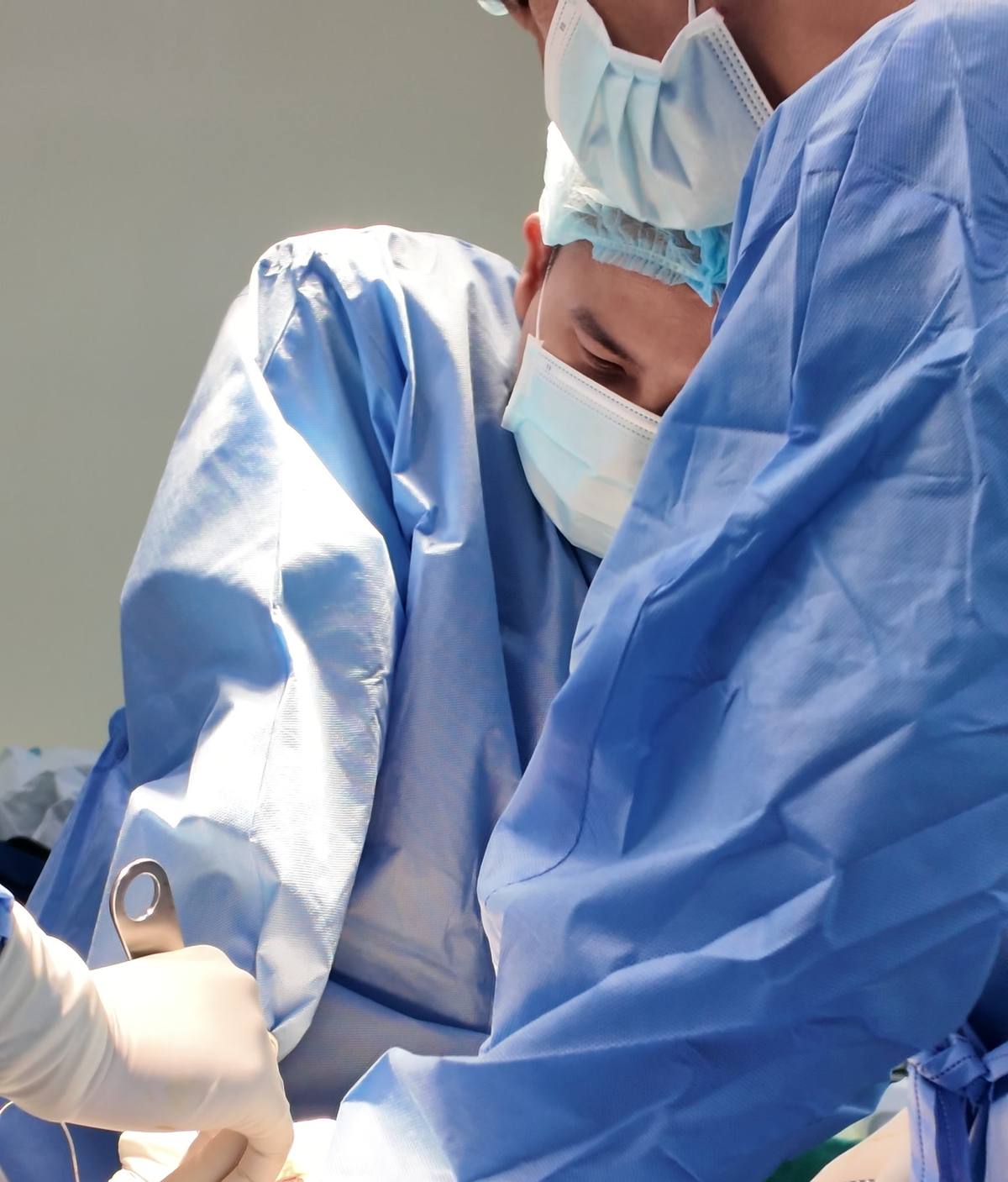
The doctor and team in the operating room
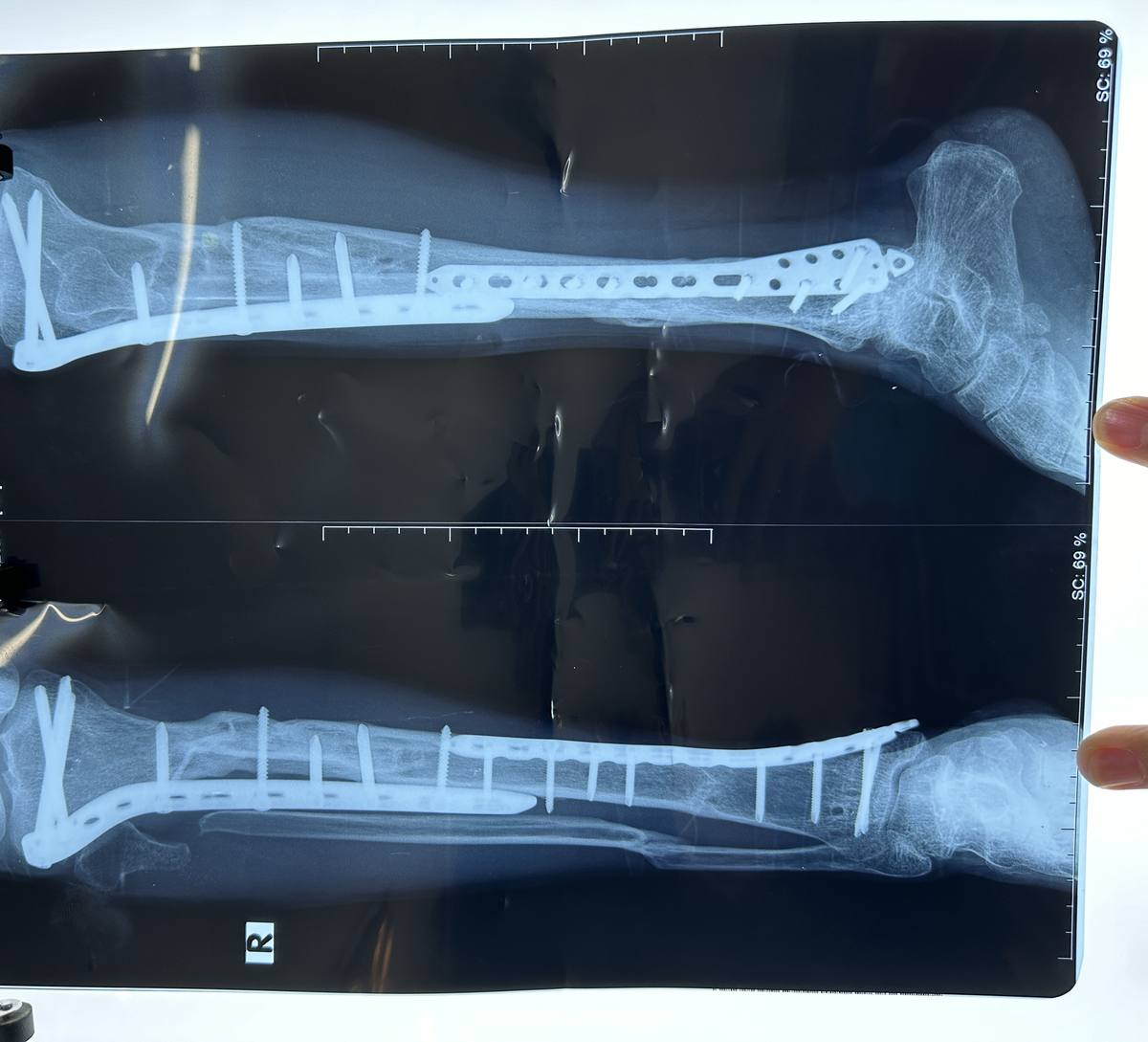
X-ray
Post-surgery X-ray (anonymized)
* Prices above are full package, no hidden extra charges. For some services the final price may be quoted as "from" (starting from), depending on each patient's actual case after the doctor's examination.
No advance transfer required — pay at the clinic, after meeting the doctor.
The trip from Cambodia
Bus: Phnom Penh – Ho Chi Minh City
Via Bavet – Moc Bai border crossing
Khmer-speaking pickup available
A Khmer interpreter stays with you through the entire examination
Inside the operating room — real footage of the doctor and team
Real footage, September 2026
Who will examine your parent?
The orthopedic specialist doctor examines in person — not handed off to an assistant. All advice is based on the actual exam and X-ray films the patient brings, not guesswork.

The doctor will tell you plainly what the case needs — no promise of a specific outcome, only help to feel more comfortable than before and know the next step clearly.
Frequently asked questions
Q: Does a clicking or popping knee mean something is wrong? A: In most cases, no — as long as it isn't paired with pain, swelling, or inflammation, it's considered normal and harmless. If those signs appear together with the clicking, it's time for an exam.
Q: What causes the knee to click when standing up or sitting down? A: Most of the time it's the kneecap not gliding smoothly in its groove, or a mild injury to the cartilage surface. It doesn't automatically mean osteoarthritis.
Q: If the knee hurts, is it still okay to walk? A: It depends on the case. With osteoarthritis, staying completely still lets the thigh muscle weaken over time, which can make the knee more painful and unstable. Good walking means flat ground, cushioned shoes, short comfortable distances, and listening to the body — stairs, slopes, and squatting are best avoided.
Q: If the knee clicks but doesn't hurt, does it need an exam? A: Not urgently. There are three signs to watch: pain, swelling of the knee, and the knee giving way. If any one of these appears, it's time to see a doctor.
Q: Should I take calcium for joint pain? A: Joint pain has nothing to do with taking calcium. A lack of calcium is what causes bone loss. Joint pain comes from worn cartilage, from fluid building up in the joint, from inflammation, or from inflammation of the capsule and the fluid around the joint. Bone loss is the thing that needs calcium replacement — and usually bone loss does not cause pain until you break something. Taking calcium carelessly can also cause stones to form.
Q: Why do my joints hurt when the weather turns cold? A: Cold weather does not damage the knee joint. When it turns cold the muscles tighten, the blood vessels tighten, and the fluid in the joint gets thicker, so the joint feels slightly stiff and becomes more sensitive to pain. People who hurt when the weather turns cold already had something going on inside the joint to begin with.
Q: What does joint pain at night mean? A: Pain at night is a sign worth paying more attention to. Inflammatory conditions and gout are the ones that hurt a lot at night. Osteoarthritis is the opposite: it hurts when you move around a lot, and it eases off when you rest. If the joint pain is severe and comes with fever and with losing weight, go and get examined right away.
Q: My big toe is swollen and too painful to walk on — what is that? A: That is the classic picture of an acute gout attack: swelling, heat, redness and pain, coming on suddenly with no injury involved. A joint infection can look exactly the same, though. So if there is no way in for bacteria and there is no fever, we lean towards gout — and you should still go and get examined right away.

Message us now
There is a Khmer speaker who will reply to you

Message on Facebook Messenger
Ho Chi Minh City, Vietnam
More about the doctor and the trip
About Dr. Trinh Coming from Cambodia Patient questions
Other conditions we treat
Gout Back pain Herniated disc Shoulder pain Neck pain Home